Practice
In defence of the 6am class
It is the hardest slot to sell, the hardest to staff, and the one with the best attendance record in the studio. Four years of running it has taught us why.

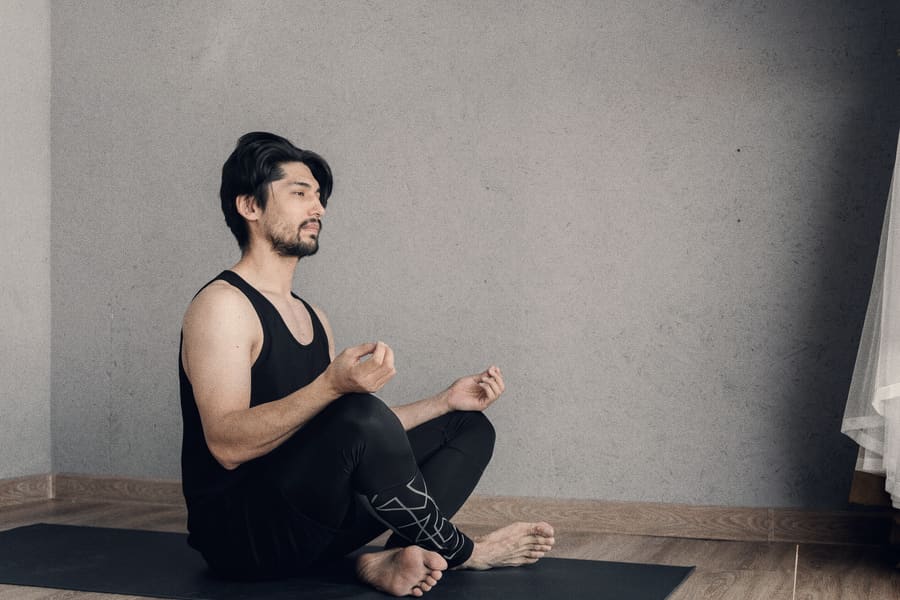
When we opened, the 6am ran twice a week and I expected it to be gone by spring. It is now on six mornings a week, it is the first class to fill, and its no-show rate is a third of the evening classes'.
Nobody predicted that, least of all me. Here is what I think is going on.
Nothing else wants that hour
The strongest argument for the 6am has nothing to do with yoga. It is that at six in the morning, almost nothing else in your life is competing for the time.
An evening class competes with dinner, with work running late, with a friend's birthday, with being tired, with the perfectly reasonable desire to sit down. Six in the morning competes with sleep and with nothing else. That is one adversary instead of nine, and one adversary you meet before you have had a chance to negotiate with yourself.
The 6am is not more disciplined than the 6pm. It is just less contested.
Our attendance data says the same thing in a duller way: evening bookings are cancelled most often between 4pm and 6pm — the window in which the day makes its counter-offer. The 6am has no equivalent window, because you are asleep in it.
The sequence does not change
The other structural thing about Morning Practice is that it is the same sequence every day, changed twice a year.
This is unfashionable. Most studios vary the class deliberately, on the theory that variety sustains interest. In my experience variety sustains attention and destroys depth, and those are different goods.
When the sequence is fixed:
- You stop spending attention on what comes next, which frees all of it for what is happening now.
- You notice change in yourself rather than in the class. Tuesday's version of a shape is comparable to last Tuesday's in a way that it never is when the whole class is different.
- The first ten minutes stop requiring a decision, which at six in the morning is worth more than it sounds.
Regulars learn it in about a month. After that, I say considerably less, and the room gets quieter.
What the hour does to a body
There are real, boring physiological facts here and they are less flattering to the morning than people assume.
Core body temperature is at its daily minimum roughly two hours before you normally wake. Spinal discs are at their most hydrated after a night lying down, which means the lumbar spine is genuinely stiffer and, in flexion, genuinely more vulnerable first thing. Grip strength, peak power and reaction time all sit lower in the early morning than in the late afternoon.
So: the 6am body is not the best body of the day for physical performance, and any class that pretends otherwise will hurt people.
That is precisely why Morning Practice opens with ten minutes of breathing rather than movement, why the first asana is standing rather than a deep forward fold, and why the sequence does not put a loaded spinal flexion anywhere in the first fifteen minutes. The traditional order — breath, then movement, then sitting — turns out to be a rather good answer to a problem it was not designed to solve.
The part nobody talks about
The best thing about the 6am is not the practice. It is walking out at 7.15 into a city that has not fully started yet, having already done the thing, with the whole day still in front of you and nothing owed to it.
That feeling is the actual product. The asana is how we get there.